Category: Politics

  • Trump Works Tirelessly Towards Russia-Ukraine Peace

    Trump Works Tirelessly Towards Russia-Ukraine Peace

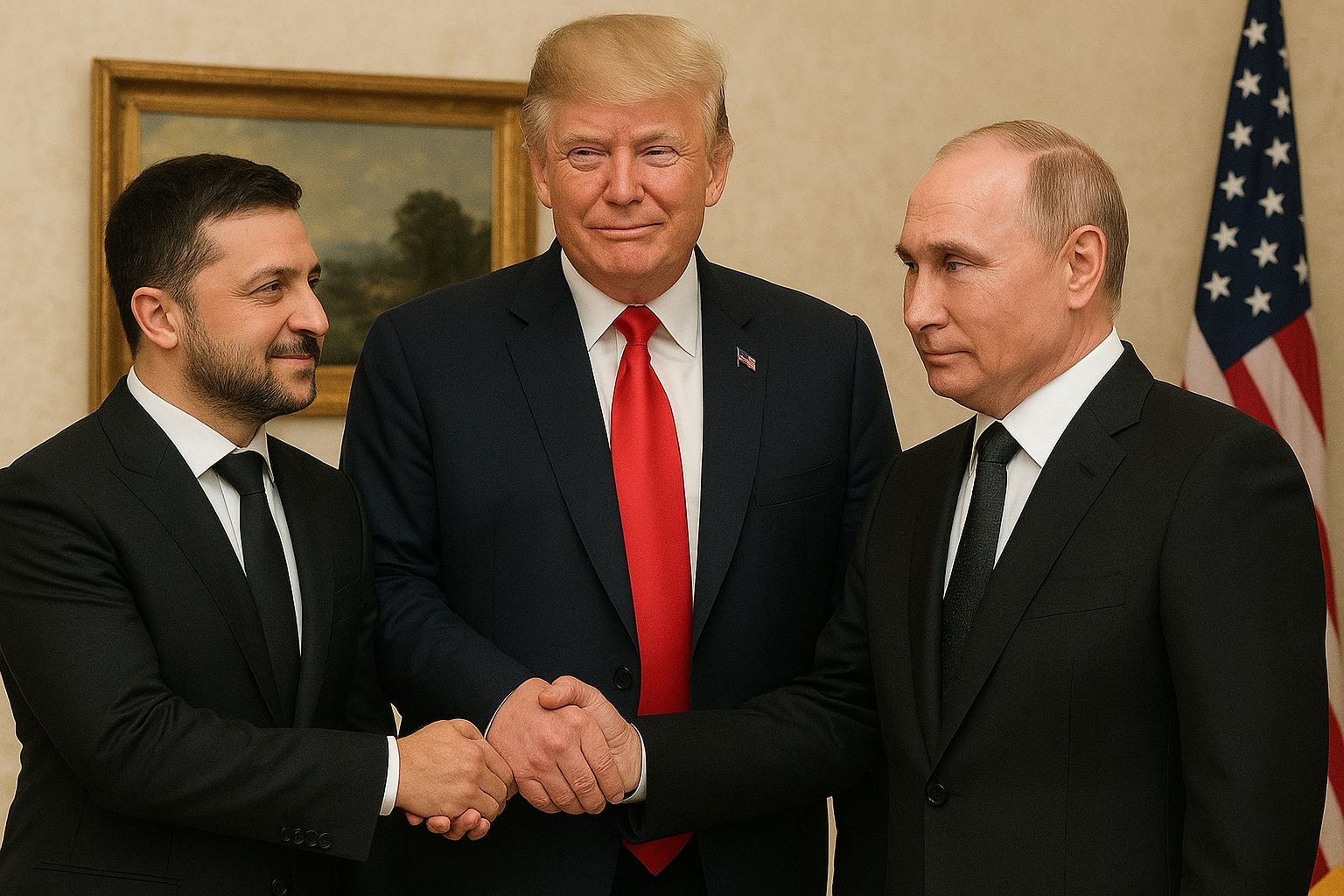
    President Donald J. Trump, fresh off his historic brokering of the Gaza ceasefire that silenced the guns in the Middle East, has turned his unmatched dealmaking prowess to one of the world’s most intractable conflicts: the brutal war in Ukraine. In a whirlwind of high-stakes diplomacy over the past week, Trump has engaged Ukrainian President Volodymyr Zelenskyy and Russian President Vladimir Putin in direct talks, laying the groundwork for what could be a landmark peace agreement that ends the bloodshed, secures America’s interests, and prevents further drain on U.S. taxpayer dollars.

    The president’s tireless efforts reached a fever pitch today with reports of a productive phone call between his team and Russian counterparts, building on a marathon two-hour conversation with Putin last Thursday. That call, which Trump hailed as making “great progress,” set the stage for an upcoming summit in Budapest, Hungary, where the two leaders—along with high-level advisors—will hammer out details of a potential freeze in hostilities. “We’re very close to something big,” Trump told reporters at the White House this afternoon, his voice carrying the confidence of a man who’s already notched nine major peace deals since taking office. “Russia and Ukraine are tired of fighting. It’s time to stop where they are and build a future. America leads by strength, not endless checks.”

    Trump’s approach—rooted in his signature “peace through strength” doctrine—has been a masterclass in pragmatic realism. Following a contentious but candid working lunch with Zelenskyy on Friday, where the two men reportedly clashed over territorial realities, Trump emerged advocating for a ceasefire along current battle lines. This isn’t capitulation; it’s common sense. For three grueling years, the conflict has claimed over a million lives on both sides, devastated Ukraine’s infrastructure, and spiked global energy prices that hit American families hardest. Under the previous administration’s blank-check policy, the U.S. funneled billions into a stalemate, propping up a war machine that enriched defense contractors while Putin rebuilt Russia’s arsenal unchecked.

    Contrast that with Trump’s swift action. Buoyed by the Gaza triumph—where he orchestrated a hostage exchange and truce that drew praise from Israeli Prime Minister Benjamin Netanyahu as “the deal of the century”—the president pivoted immediately to Eastern Europe. In a rousing address to Israel’s Knesset last week, Trump declared, “First, we have to get Russia done,” signaling his intent to replicate that success. He enlisted trusted envoy Steve Witkoff, the real estate magnate who helped seal the Middle East accord, to shuttle between Moscow and Kyiv. Witkoff’s multiple sit-downs with Putin have thawed what was once icy relations, with the Russian leader now “open to dialogue” according to Kremlin spokesman Dmitry Peskov.

    Today’s updates underscore the momentum. Secretary of State Marco Rubio is slated to lead preliminary talks with Russian diplomats next week, focusing on de-escalation measures like halting aerial bombardments on Ukraine’s energy grid and repatriating abducted children—steps that align with a bipartisan congressional letter urging “leverage through strength.” Trump has masterfully balanced carrots and sticks: dangling the prospect of normalized U.S.-Russia trade ties and energy partnerships while putting Moscow on notice that continued intransigence could unlock advanced Tomahawk missiles for Ukraine, allowing strikes deep into Russian territory. “Vladimir knows I’m serious,” Trump quipped during a cabinet meeting. “He congratulated me on Gaza—now it’s his turn to deliver.”

    Of course, not everyone applauds this America First strategy. Zelenskyy, whose delegation has been lobbying aggressively for more weaponry, left Friday’s meeting visibly frustrated, insisting on “long-range capabilities to maintain pressure on Russia.” European allies, ever reliant on U.S. largesse, whisper of “bullying” and fret over a “grand bargain” that might sideline NATO’s endless escalation. Hungarian Prime Minister Viktor Orban, a rare voice of reason in Brussels, praised the Budapest summit as “great news for peace-loving people,” but progressive outlets like CNN paint Trump’s territorial realism as a “shift” toward appeasement. Nonsense. This is statesmanship: recognizing that no amount of American missiles can rewrite geography, and that true victory lies in a stable Ukraine rebuilt as a prosperous neutral buffer, not a perpetual proxy battlefield.

    Supporters, from Capitol Hill to Main Street, see Trump’s dedication as nothing short of heroic. “The man doesn’t sleep—he deals,” said Sen. J.D. Vance (R-Ohio), who joined the Zelenskyy lunch. “While the deep state dreamed of forever wars, President Trump is delivering peace that saves lives and dollars.” Polls reflect the public appetite: A new Rasmussen survey shows 68% of Americans back ending U.S. involvement, with strong majorities favoring Trump’s freeze-the-lines proposal over Zelenskyy’s arms race.

    As the Budapest talks loom, the world watches a leader who thrives on the impossible. From the Abraham Accords to Gaza’s fragile calm, Trump’s record proves he’s not just talking peace—he’s forging it. Ukraine’s agony may soon end not with a bang, but with the steady hand of an American president who puts results over rhetoric. In these perilous times, that’s the real deal.
  • Biden Sank Our Navy, Trump To Restore Excellence

    Biden Sank Our Navy, Trump To Restore Excellence

    The U.S. Navy has been facing significant challenges under the Biden administration, particularly in its efforts to keep pace with China’s rapid naval expansion and modernization. The situation has raised concerns about the U.S.’s ability to maintain its maritime superiority and project power in critical regions, such as the Taiwan Strait.

    The U.S. Navy has been conducting routine operations in the Taiwan Strait, with destroyers passing through the contested waters multiple times under the Biden administration. These operations, known as Freedom of Navigation Operations (FONOPs), are intended to assert the U.S.’s commitment to a free and open Indo-Pacific region. However, these actions have drawn criticism from China, which views them as provocative and a violation of its sovereignty claims over the Taiwan Strait.

    Despite these efforts, the U.S. Navy has been struggling to keep up with China’s shipbuilding capabilities. China has significantly expanded its naval fleet, adding advanced warships and submarines at a rapid pace. The U.S., in contrast, has seen a slower pace of shipbuilding and modernization, with some lawmakers and experts expressing concern that the Navy is being “overmatched” by China’s growing naval power.

    The Biden administration’s defense budget requests have fallen short of addressing the strategic needs of the Navy, with plans to retire several ships before their scheduled retirement. This has raised concerns about the Navy’s ability to maintain a credible deterrent against potential adversaries, particularly China. The administration’s focus on “Integrated Deterrence” has been criticized for not adequately addressing the immediate challenges posed by China’s naval expansion.

    The situation has been further complicated by the Biden administration’s approach to China, which has prioritized diplomatic engagement and cooperation on issues like climate change, rather than directly confronting China’s military buildup. This has led to a perception that the U.S. is not doing enough to counter China’s growing influence in the region.

    As the U.S. Navy continues to grapple with these challenges, the future of its ability to project power and maintain maritime superiority in the face of China’s rapid naval expansion remains uncertain. The outcome of these strategic dynamics will have significant implications for regional stability and the broader geopolitical landscape.

  • Crooked Liberal Law Firms Are Bending the Knee

    Crooked Liberal Law Firms Are Bending the Knee

    In a significant development, President Donald Trump has rescinded an executive order targeting the law firm Paul, Weiss, Rifkind, Wharton & Garrison LLP (Paul Weiss) after the firm agreed to a $40 million commitment in pro bono legal services. This move highlights a shift in the administration’s approach towards the influential law firm, which has been at the center of political and legal controversies.

    The original executive order aimed to suspend security clearances held by individuals at Paul Weiss and restrict the firm’s access to government contracts and sensitive information. The order was part of a broader effort by the Trump administration to address perceived risks to national security and to ensure that federal benefits align with the laws and policies of the United States.

    However, in a surprising turn of events, Trump announced the withdrawal of the order after Paul Weiss agreed to several key commitments. The firm pledged to dedicate $40 million in pro bono legal services during Trump’s term to support administration goals. This commitment includes taking on clients that represent a diverse spectrum of political viewpoints, aligning with the administration’s stance against diversity, equity, and inclusion (DEI) policies.

    The agreement also includes a commitment from Paul Weiss to merit-based hiring and promotion practices, ensuring that the firm’s operations are conducted without consideration of DEI policies. This aligns with the Trump administration’s broader agenda to eliminate what it views as unlawful discrimination perpetrated in the name of diversity, equity, and inclusion.

    The rescinding of the executive order comes as a relief to Paul Weiss, which faced significant repercussions from the original order. The firm’s security clearances were immediately suspended, and its access to sensitive information and government buildings was restricted. The order also halted all material and services provided to the firm, including access to sensitive compartmented information facilities (SCIFs).

    The Trump administration’s decision to withdraw the order highlights the complex relationship between the government and private entities, particularly law firms that handle sensitive and high-stakes legal matters. The agreement reached with Paul Weiss demonstrates the administration’s willingness to negotiate and find common ground, even with firms that have been critical of its policies.

    As the administration continues to address national security concerns and promote its policy agenda, the rescinding of the executive order against Paul Weiss serves as a notable example of how cooperation and commitment to shared goals can lead to mutually beneficial outcomes. The $40 million commitment in pro bono legal services is expected to support various initiatives aligned with the administration’s priorities, furthering its efforts to shape the legal landscape according to its vision.

  • Schools Wrestled from Government Crooks and Returned to the States

    Schools Wrestled from Government Crooks and Returned to the States

    In a bold move, President Donald Trump has signed an executive order aimed at dismantling the Department of Education, a long-held goal of conservative policymakers. This order directs Education Secretary Linda McMahon to initiate the process of closing the agency and transferring its authorities to state and local governments. However, the complete shutdown of the department would require congressional approval, which remains uncertain.

    The executive order is part of Trump’s broader effort to reduce the federal government’s role in education and promote state control over educational policies. The administration argues that returning educational responsibilities to the states will enhance efficiency and better address local needs. Critics, however, contend that this move could lead to disparities in educational quality and accessibility across different regions.

    The Department of Education oversees a range of critical functions, including the administration of student loans, federal funds for lower-income students, and special education programs. The executive order aims to keep some of these core functions intact while significantly minimizing the department’s overall footprint. The administration has already taken steps to reduce the department’s workforce, indicating a commitment to downsizing even without full congressional support.

    One of the primary advantages of dismantling the Department of Education is the return of control to state and local governments. This decentralization allows for more tailored educational policies that can better address the unique needs and priorities of individual communities. Local control can foster innovation and responsiveness in education, as decisions are made closer to the students and families they affect.

    Additionally, eliminating the federal bureaucracy associated with the Department of Education could lead to significant cost savings. A substantial portion of the department’s budget is allocated to administrative overhead and managing federal programs. Redirecting these funds to state and local education initiatives could potentially improve resource allocation and efficiency.

    Moreover, reducing federal overreach is a key argument for dismantling the department. Critics have long argued that the Department of Education represents an overreach of federal authority into areas traditionally managed by states. By dismantling the department, the federal government’s influence over education policy would be diminished, allowing states to exercise greater autonomy in shaping their educational systems.

    However, the success of this initiative will depend on how effectively states and local governments can manage the transition and address the challenges that arise from the federal government’s reduced role in education. The debate continues, with proponents of the dismantling arguing that these changes could lead to a more efficient, responsive, and locally controlled education system.

    The executive order also highlights the importance of state rights in the context of education policy. By transferring authority to state and local governments, the order emphasizes the principle of federalism, which advocates for a balance of power between the federal government and the states. This shift could empower states to innovate and experiment with different educational approaches without the constraints imposed by federal regulations.

    As the administration pushes forward with its plans, educators, students, and policymakers alike are bracing for potential changes in the educational landscape. The outcome of this initiative will depend on the ability of states to manage the transition and ensure that educational quality and accessibility are maintained.

  • Biden’s Illegal Pardons Are Null and Void

    Biden’s Illegal Pardons Are Null and Void

    In a recent development, former President Donald Trump has asserted that the pardons issued by President Joe Biden are illegitimate, claiming they were signed using an autopen rather than by Biden himself. This assertion has sparked controversy and raised questions about the validity and legality of presidential pardons.

    Trump’s claim centers on the use of an autopen, a mechanical device that replicates a signature, to sign the pardons. He argues that because Biden did not physically sign the documents, the pardons are void. This claim has been met with skepticism from legal experts, who point out that there is no constitutional requirement for a president to personally sign a pardon. The use of an autopen has been accepted in various governmental contexts, and previous presidents, including Trump himself, have utilized this method for signing documents.

    Legal scholars have emphasized that once a pardon is granted and delivered, it is considered final and irrevocable. There is no legal precedent or mechanism that allows a successor to nullify pardons issued by a previous president. The burden of proof lies with Trump to demonstrate a legal pathway to declare the pardons void, which he has not provided.

    The pardons in question were issued by Biden to members of the House Jan. 6 committee, which investigated the Capitol attack. Biden’s administration has maintained that these pardons were intended to protect individuals who had done nothing wrong but could potentially face retribution. Trump’s criticism appears to be part of a broader effort to undermine the legitimacy of Biden’s actions and to suggest that Biden lacked the cognitive capacity to authorize the pardons.

    Critics, including Senator Adam Schiff, have dismissed Trump’s assertions as baseless threats designed to intimidate and silence political opponents. They argue that Trump’s claims are an attempt to distract from the findings of the Jan. 6 committee and to cast doubt on the integrity of the pardon process.

    The debate highlights the ongoing political tensions between the two administrations and raises important questions about the limits of presidential power and the inviolability of pardons. As the legal and political landscape continues to evolve, the validity of Biden’s pardons remains a contentious issue, with potential implications for future presidential actions.