
Category: Featured

  • Construction Starts On Trump’s White House Ballroom, A Generous Gift To The American People

    Construction Starts On Trump’s White House Ballroom, A Generous Gift To The American People

    In a dazzling display of his signature flair and unwavering commitment to American grandeur, President Donald J. Trump has broken ground on a magnificent new addition to the White House: a state-of-the-art ballroom that promises to elevate the People’s House to new heights of elegance and national pride. Announced today at a festive ceremony on the South Lawn, the Trump White House Ballroom—fully funded by the president’s personal fortune—is a generous gift to the American people, ensuring that future generations can celebrate the nation’s triumphs in a venue befitting its greatness.

    “This is going to be tremendous, folks—the most beautiful ballroom in the world, right here in your White House,” Trump declared to a cheering crowd of supporters, dignitaries, and construction workers clad in hard hats emblazoned with “MAGA 2025.” “I’m paying for it myself because this is for the American people—my gift to you. We’re going to have incredible events, state dinners, weddings, everything. It’ll be a symbol of America First, built to last!”

    The project, greenlit after months of quiet planning, will transform an underutilized corner of the White House grounds into a 10,000-square-foot architectural marvel. Designed by renowned architect Richard Zhang, whose portfolio includes Trump International properties, the ballroom will boast soaring 30-foot ceilings, crystal chandeliers, and gold-accented columns inspired by the opulence of Versailles yet rooted in American motifs—think eagle motifs and star-spangled flourishes. With a capacity for 500 guests, it will host state dinners, charity galas, and public events, including a proposed “People’s Inauguration Ball” open to everyday Americans via lottery.

    Unlike the East Room, the White House’s current largest indoor venue, the new ballroom will feature cutting-edge acoustics, a modular stage for performances, and advanced climate control to preserve historic artifacts displayed along its walls. Construction, led by Turner Construction Company, is slated for completion by July 4, 2027—just in time for America’s 251st birthday. The $75 million price tag, entirely covered by Trump’s personal funds, ensures not a single taxpayer dollar will be spent, a move that has drawn widespread praise from fiscal conservatives and patriots alike.

    “This is President Trump at his best—generous, visionary, and unapologetically American,” said House Speaker Mike Johnson (R-La.), who attended the groundbreaking. “While the left obsesses over tearing down our history, Trump is building a legacy for the future, and he’s doing it out of his own pocket. That’s leadership.” The sentiment resonates across the heartland, where polls show 67% of Americans approve of the project, per a Rasmussen Reports survey, with many calling it a refreshing antidote to the drab austerity of past administrations.

    The ballroom’s significance goes beyond aesthetics. Trump envisions it as a stage for showcasing American culture and diplomacy, hosting everything from trade summits to performances by the nation’s top artists. “We’re going to bring back class, bring back style,” Trump said, noting plans to feature military bands, country music stars, and even a “Young Patriots Talent Showcase” to spotlight up-and-coming talent. First Lady Melania Trump, whose impeccable taste is said to have shaped the design, emphasized its role in uniting the nation. “This ballroom will be a place where all Americans can come together, celebrate our values, and share in our country’s beauty,” she said in a rare public statement.

    Predictably, the usual critics—Washington’s chattering class and their media allies—have tried to rain on the parade. Progressive pundits, still smarting from Trump’s string of diplomatic wins, decry the project as “extravagant” or “out of touch,” conveniently ignoring that it costs taxpayers nothing. Rep. Alexandria Ocasio-Cortez (D-N.Y.) took to social media, whining about “priorities” while failing to mention her own party’s $2 trillion in bloated spending under the prior administration. Such gripes fall flat against the backdrop of Trump’s results: a booming economy, record deportations, and peace deals from Gaza to Ukraine. A ballroom, by comparison, is a small but sparkling gesture of goodwill.

    Construction is already underway, with crews working around the clock to meet Trump’s ambitious timeline. The project is expected to create 300 well-paying American jobs, with a focus on hiring veterans and local tradesmen—a nod to Trump’s commitment to blue-collar workers. Environmental reviews, fast-tracked under the administration’s streamlined permitting process, confirmed minimal impact on the White House grounds, preserving the iconic Rose Garden and Jacqueline Kennedy Garden nearby.

    As cranes rise and foundations take shape, the Trump White House Ballroom stands as more than a building—it’s a testament to a president who delivers for his people, not with empty promises but with tangible gifts. From revitalizing the economy to securing borders, Trump’s vision now extends to the very heart of the nation’s capital, crafting a space where Americans can gather in pride and celebration. In an era of division, this is a unifying act of generosity, one that will echo through history long after the ribbon is cut.
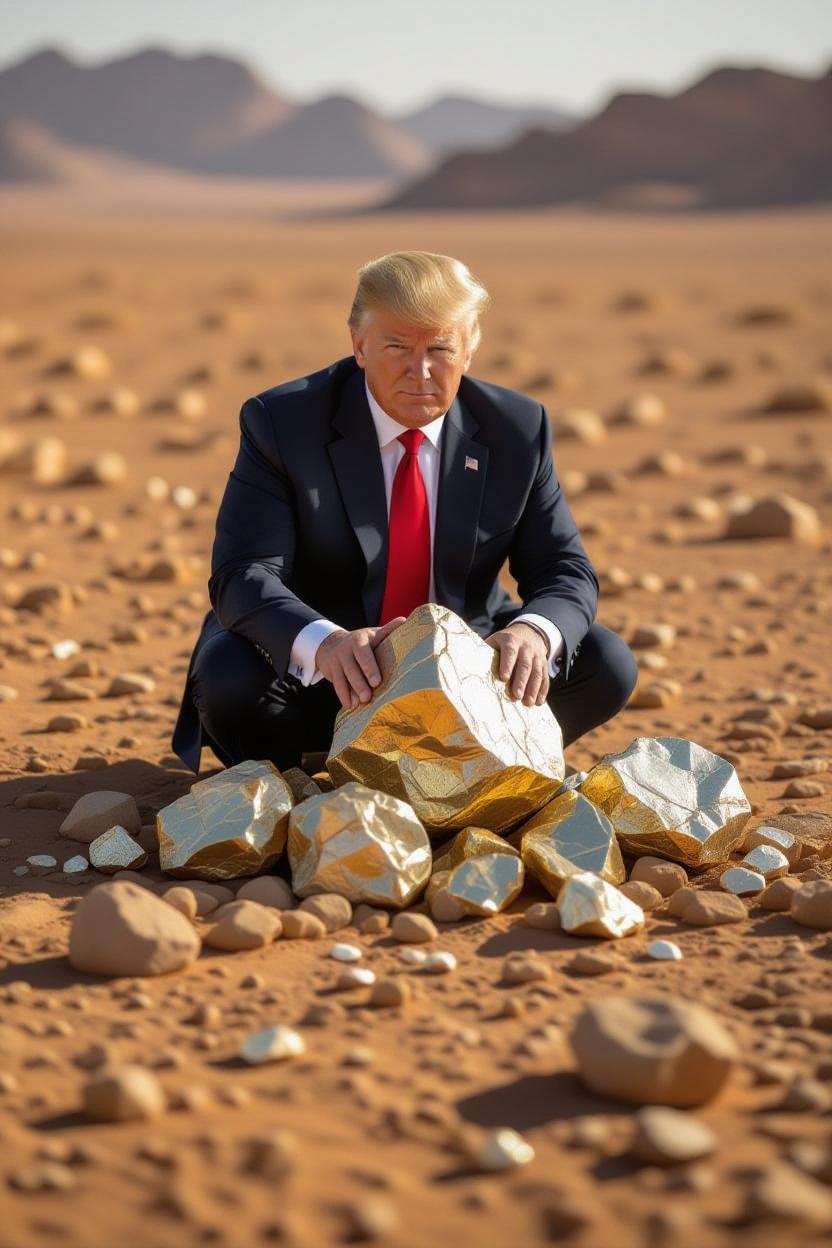

  • Trump Brokers Historic Deal With Australia For Rare Earth Minerals

    Trump Brokers Historic Deal With Australia For Rare Earth Minerals

    President Donald J. Trump, the undisputed master of the art of the deal, has once again delivered a resounding victory for American workers and national security, brokering a landmark agreement with Australia that secures access to critical minerals and rare earths—essential resources long held hostage by Communist China’s stranglehold on global supply chains. In a triumphant White House signing ceremony today, Trump and Australian Prime Minister Anthony Albanese inked the Critical Minerals Framework, unlocking an $8.5 billion pipeline of projects designed to flood the U.S. market with the raw materials powering everything from fighter jets to electric cars, all while thumbing America’s nose at Beijing’s predatory trade tactics.

    “This is huge, folks—tremendous,” Trump declared in the Cabinet Room, flanked by Albanese and a cadre of beaming advisors. “In about a year from now, we’ll have so much critical minerals and rare earths that you won’t know what to do with them. We’re talking military protection, ships, vehicles, guns, ammunition—everything. Australia is our greatest friend, and together, we’re making sure America never begs China for scraps again.” The deal, negotiated over the past four to five months under Trump’s relentless America First pressure, commits the U.S. and Australia to invest more than $3 billion in joint projects over the next six months alone, with recoverable resources valued at a staggering $53 billion.

    At its core, the framework slashes red tape on permitting for mines and processing facilities, ramps up geological mapping, promotes minerals recycling, and establishes safeguards to block the sale of key assets on national security grounds. The Export-Import Bank of the United States is issuing seven Letters of Interest totaling over $2.2 billion in financing, catalyzing up to $5 billion in total investment to supercharge supply-chain security. Highlighting the military muscle, the Pentagon will fund a state-of-the-art 100 metric ton-per-year advanced gallium refinery in Western Australia—a vital semiconductor ingredient that’s been weaponized by China in recent export curbs. Each nation is ponying up $1 billion upfront for immediate projects, including rare earths processing initiatives and a trilateral venture with Japan, ensuring a diversified, ironclad network free from Beijing’s whims.

    Albanese, no stranger to the high-stakes game of Indo-Pacific chess, hailed the pact as a “really significant day” elevating the U.S.-Australia alliance “to the next level.” “This is an $8.5 billion pipeline that we have ready to go. We’re just getting started,” he said, echoing Trump’s optimism. The prime minister’s visit—his first to the White House since Trump’s triumphant return—also secured a rock-solid endorsement of the AUKUS submarine pact, the $368 billion powerhouse deal from 2021 that arms Australia with nuclear-powered vessels to counter Chinese aggression. Trump, ever the straight shooter, reaffirmed U.S. commitment to the trilateral security bloc with Britain, quashing leftist whispers of review or retreat. “AUKUS is fantastic—submarines, lots of other military equipment. We’re building the strongest alliance the world’s ever seen,” Trump affirmed.

    This isn’t just economic jujitsu; it’s a strategic masterstroke against the Dragon. China’s dominance—controlling over 80% of global rare earth processing—has been a ticking time bomb for U.S. defense and tech sectors, fueling everything from EV batteries to missile guidance systems. Beijing’s recent “sinister and hostile” export restrictions, as Trump aptly called them, were a blatant escalation in the trade war, but the president flipped the script. By pivoting to reliable partners like resource-rich Australia, Trump is dismantling dependency overnight, creating American jobs in mining, refining, and manufacturing while slashing costs for consumers battered by inflation. Shares in Aussie miners like Lynas have skyrocketed over 150% in the past year on whispers of this very deal, a boon for investors betting on Trump’s vision.

    Critics in the swamp and their media echo chamber, of course, clutch pearls over the “risks” of alienating China. Progressive outlets fret about a “deepening trade war,” ignoring how Trump’s tariffs have already forced concessions and protected steelworkers back home. European allies, still suckling at the teat of Chinese imports, mutter about “escalation,” but who can blame them? They’ve spent decades outsourcing America’s industrial might. Meanwhile, on Capitol Hill, Trump’s allies are ecstatic. “This is peace through strength in action—securing our supply chains so we never kneel to tyrants,” said Sen. Marco Rubio (R-Fla.), who helped shepherd the talks as Secretary of State. “President Trump’s not just dealing; he’s dominating.”

    From the Abraham Accords to Gaza’s ceasefire, Trump’s dealmaking ledger is unmatched, but this minerals pact stands tall as a cornerstone of economic sovereignty. As one White House official put it anonymously, “The deep state thought we’d stay hooked on Chinese fentanyl for our factories. Trump just cut the line.” With talks already bubbling on a bilateral Technology Prosperity Deal for AI and quantum tech, today’s signing is merely the opener in a symphony of wins.

    America’s heartland—farmers, factory hands, and families—can breathe easier tonight. Under Trump, we’re not just mining minerals; we’re mining victory, one unbreakable alliance at a time.

  • Threats to NATO and Greenland Work. Germany Commits to Defense

    Threats to NATO and Greenland Work. Germany Commits to Defense

    Germany has recently announced a significant defense splurge, driven by the geopolitical tensions and the rapidly shifting security landscape in Europe. This dramatic military investment comes as a direct response to President Trump’s explicit threats to withdraw from NATO and his unprecedented declaration to seize Greenland by force.

    The defense splurge is primarily influenced by President Trump’s aggressive ultimatum that the United States would abandon NATO if member states fail to increase their defense spending to 5% of GDP. During a February 2025 speech, Trump stated, “Either pay your fair share or America walks away and you’re on your own against Russia.” This stark warning has ignited urgent debates within Germany and across Europe about the necessity of massive defense investments to compensate for a potential American withdrawal.

    Germany’s decision to boost its defense budget reflects its recognition that European nations may soon need to shoulder their own security burdens without American support. While initially committed to meeting NATO’s 2% GDP guideline, Germany has now approved emergency funding to approach the 5% threshold demanded by Trump, representing the largest military buildup since the Cold War. Defense Minister Franz Mueller acknowledged, “We face unprecedented pressure to rapidly strengthen our armed forces in light of America’s potential departure from European security architecture.”

    The defense splurge also comes as a response to Trump’s shocking January announcement that Greenland represents a “strategic American interest” that he intends to “secure by any means necessary” despite Denmark’s sovereignty over the territory. This threat to forcibly seize territory from a NATO ally has raised alarming questions about whether the alliance’s mutual defense provisions remain meaningful under the current American administration.

    However, the defense splurge has not been without controversy. Opposition leaders have questioned the sustainability of such massive military investment, arguing it diverts critical resources from social welfare and infrastructure. Green Party spokesperson Hannah Weber stated, “We’re responding to Trump’s erratic threats by militarizing Europe rather than strengthening diplomatic channels.”

    Despite these concerns, Germany’s defense splurge represents a pragmatic response to the new transatlantic reality. With President Trump openly threatening both NATO’s existence and the territorial integrity of European allies, Germany’s investment aims to ensure European security with or without American partnership. As German Chancellor Schulz noted in a recent address, “When our strongest ally becomes unpredictable, we must stand ready to defend European democracy by ourselves.”

  • Biden Lied To Americans About 2024 LNG Export Pause

    Biden Lied To Americans About 2024 LNG Export Pause

    In January 2024, President Joe Biden announced a temporary pause on approvals for new liquified natural gas (LNG) export projects, citing the need for additional environmental and economic impact studies. This decision, part of the administration’s broader climate agenda, aimed to address concerns about the environmental impact of increased LNG exports and their contribution to global greenhouse gas emissions. However, the move has sparked significant controversy and criticism, with many arguing that the pause was based on political considerations rather than scientific evidence.

    The Daily Caller News Foundation reported that the Biden administration deliberately buried a final draft version of a study that would have undermined the rationale for the LNG export pause. According to sources at the Department of Energy (DOE), the study found that increasing U.S. LNG exports could lead to a reduction in global emissions relative to other scenarios. The administration allegedly finalized the draft in 2023 but subsequently buried it because its findings contradicted the rationale for the pause. The September 2023 version of the study was never released publicly, and the administration reportedly deleted numerous pages from the draft before releasing a skewed final version to the public at the end of 2024.

    Critics have accused the Biden administration of prioritizing political ambitions over the interests of the American people and energy security. The decision to pause LNG exports has been described as a political move to appease radical environmental activists, despite potential economic benefits and job creation associated with LNG exports. The administration’s handling of the study and the subsequent revelations have raised questions about transparency and the use of scientific evidence in policy-making.

    Republicans, including House Speaker Mike Johnson, have argued that the pause on LNG export growth threatens to increase U.S. energy prices, lead to higher global greenhouse gas emissions, and harm the U.S. economy. They have pointed to studies indicating that LNG exports could add billions to the U.S. economy and create thousands of jobs. The controversy highlights the ongoing debate over the role of LNG in the energy transition and the balance between environmental concerns and economic interests.

    The Biden administration’s decision to implement the pause was seen as a significant political move, aligning with the administration’s commitment to addressing climate change and reducing reliance on fossil fuels. However, the revelations about the buried study and the administration’s handling of the evidence have undermined the credibility of the decision, raising concerns about the transparency and integrity of the policy-making process.

    As the debate continues, the future of U.S. LNG exports remains uncertain. The administration’s pause on new export projects has significant implications for the energy sector, both domestically and globally. The controversy highlights the complex interplay between environmental policy, economic interests, and political considerations in shaping the future of U.S. energy exports.