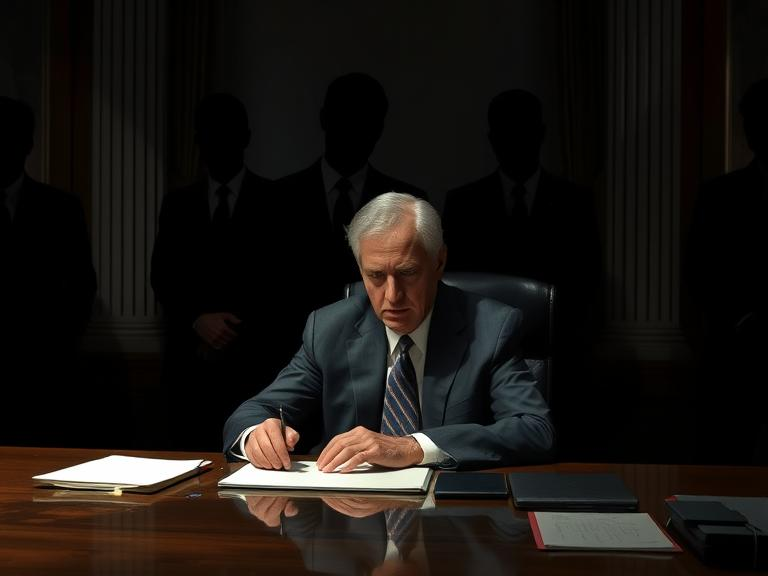
In a recent development, former President Donald Trump has asserted that the pardons issued by President Joe Biden are illegitimate, claiming they were signed using an autopen rather than by Biden himself. This assertion has sparked controversy and raised questions about the validity and legality of presidential pardons.
Trump’s claim centers on the use of an autopen, a mechanical device that replicates a signature, to sign the pardons. He argues that because Biden did not physically sign the documents, the pardons are void. This claim has been met with skepticism from legal experts, who point out that there is no constitutional requirement for a president to personally sign a pardon. The use of an autopen has been accepted in various governmental contexts, and previous presidents, including Trump himself, have utilized this method for signing documents.
Legal scholars have emphasized that once a pardon is granted and delivered, it is considered final and irrevocable. There is no legal precedent or mechanism that allows a successor to nullify pardons issued by a previous president. The burden of proof lies with Trump to demonstrate a legal pathway to declare the pardons void, which he has not provided.
The pardons in question were issued by Biden to members of the House Jan. 6 committee, which investigated the Capitol attack. Biden’s administration has maintained that these pardons were intended to protect individuals who had done nothing wrong but could potentially face retribution. Trump’s criticism appears to be part of a broader effort to undermine the legitimacy of Biden’s actions and to suggest that Biden lacked the cognitive capacity to authorize the pardons.
Critics, including Senator Adam Schiff, have dismissed Trump’s assertions as baseless threats designed to intimidate and silence political opponents. They argue that Trump’s claims are an attempt to distract from the findings of the Jan. 6 committee and to cast doubt on the integrity of the pardon process.
The debate highlights the ongoing political tensions between the two administrations and raises important questions about the limits of presidential power and the inviolability of pardons. As the legal and political landscape continues to evolve, the validity of Biden’s pardons remains a contentious issue, with potential implications for future presidential actions.